Flower Tea in Decorative Style: A Premium Display Typeface
Understanding the Visual Language of This Creative Asset
When you first encounter Flower Tea in Decorative Style, you immediately recognize it is more than just a standard serif font or a simple sans serif font. It is a carefully crafted piece of modern typography designed to evoke a specific emotional response. As a display font, its primary goal is to grab attention, but it does so with a distinct personality that balances elegance with artistic flair. The design characteristics often feature organic curves, decorative serifs, or perhaps a subtle script-like quality that feels fluid and sophisticated. It avoids the rigidity of geometric shapes, opting instead for a visual rhythm that mimics the natural flow of botanical elements.
For designers and brand strategists, understanding the personality of Flower Tea in Decorative Style is crucial. It carries a sense of luxury and artisanal craftsmanship. If you are building a brand identity for a high-end boutique, a wellness spa, or a floral studio, this typeface communicates quality without needing a single word of body copy. The weight and spacing of the characters are optimized for high-impact moments. It works best when used for headers, logos, or hero text where the aesthetic needs to be felt instantly. It is not designed to disappear into the background; rather, it serves as a central design asset that anchors the visual hierarchy of your project.
Strategic Applications Across Digital and Print Mediums
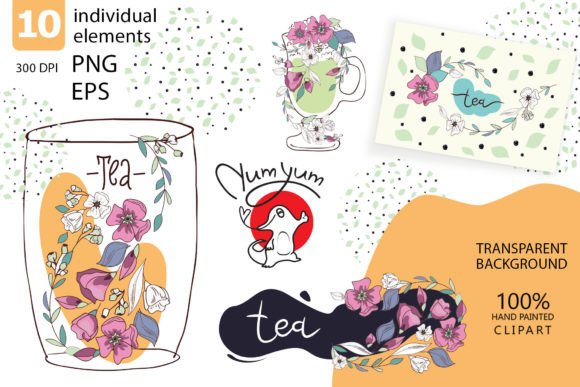
One of the most valuable aspects of this package is the versatility of the file formats. You will receive 10 files on a transparent background in EPS and PNG 300 dpi format. This technical specification is vital for professional output. The 300 dpi PNG files ensure that your graphics remain crisp and clear in print environments, preventing the pixelation that often plagues lower-resolution assets. Whether you are a small business owner creating merchandise or a graphic designer working on a client pitch, the quality of the source files directly impacts the perceived professionalism of the final product.
The applications for Flower Tea in Decorative Style are extensive, particularly in the realm of sublimation design. Because the files are ready for sublimation prints, you can easily transfer these intricate designs onto physical goods like clothes, mugs, tote bags, and coasters. The transparent background allows for seamless integration onto colored surfaces, giving you creative freedom to experiment with different product mockups. Beyond physical goods, this style excels in editorial design and packaging design. Imagine using these assets to create stunning party invitations, wedding stationery, or greeting cards. The decorative nature of the font adds a layer of texture and depth that standard commercial fonts often lack.
Maximizing Impact in Branding and Marketing
In the crowded landscape of social media graphics and web design, standing out is essential. Flower Tea in Decorative Style offers a solution for content creators and marketers looking to inject personality into their visual content. When used for wall prints or digital art, it creates a focal point that draws the viewer’s eye. For bloggers and publishers, incorporating this typeface into your featured images or newsletter headers can significantly increase engagement. It signals to your audience that you value aesthetics and attention to detail, which can positively influence brand perception and trust.
However, readability must remain a priority. As a decorative or creative font, it is best suited for short bursts of text—headlines, titles, and call-to-action phrases. Using it for long paragraphs of body copy would likely hinder the reading experience. Instead, pair it with a clean, legible sans serif font for your descriptions and articles. This contrast creates a dynamic visual hierarchy, allowing the decorative elements to shine while ensuring your message is communicated clearly. This approach to font pairing is a standard practice in modern typography, ensuring that style never compromises function.
Evaluating Fit and Commercial Potential
Before integrating Flower Tea in Decorative Style into your workflow, it is helpful to evaluate if it aligns with your specific project needs. Look at the overall mood of the typeface. Does it match the voice of the brand you are representing? If your project requires a gritty, urban aesthetic, this floral-inspired style might feel out of place. Conversely, if you are aiming for a vibe that is romantic, vintage, or naturally inspired, this is an excellent choice. Review the included styles and glyphs to see how the characters interact with one another. Look for unique ligatures or stylistic alternates that can add a custom feel to your designs.
From a commercial licensing perspective, the value proposition is strong. The product description notes that the number of products you can create with the design is unlimited. For entrepreneurs and small business owners, this is a significant advantage. You can scale your product line—from digital downloads to physical inventory—without worrying about additional royalty fees. This freedom allows you to experiment with different markets, such as selling wall art prints on Etsy or offering custom party invitation services. It transforms the font from a simple design tool into a scalable business asset.
Ultimately, Flower Tea in Decorative Style is a specialized tool for creatives who understand the power of visual storytelling. It requires a thoughtful approach to implementation, respecting its decorative nature while leveraging its high-quality file formats. By using it strategically in logo design, product packaging, and digital marketing materials, you can elevate the visual quality of your work and create a more memorable experience for your audience. It is a testament to how thoughtful typography can influence the success of a creative project.